
The ECSTATIC New Release Notebook
On Yuppie Fear Thrillers, Crying for Your Oscar, Elegant Subversions, and more

Welcome to another edition of the New Release Notebook as you continue to sort out the cinema of 2026. Remember to check out the ECSTATIC Notebook Section of ESN for over three years of notebooks covering new releases, repertory, cult, and everything in-between.
And this particular edition of the Notebook is FREE for all subscribers!
Not yet a full subscriber? Click below to subscribe and never miss a post on ESN. This is a solo project, and I keep the subscription price as low as Substack allows. Your contribution is greatly appreciated!
Now, onward to 2026!
Is This Thing On?
dir. Bradley Cooper
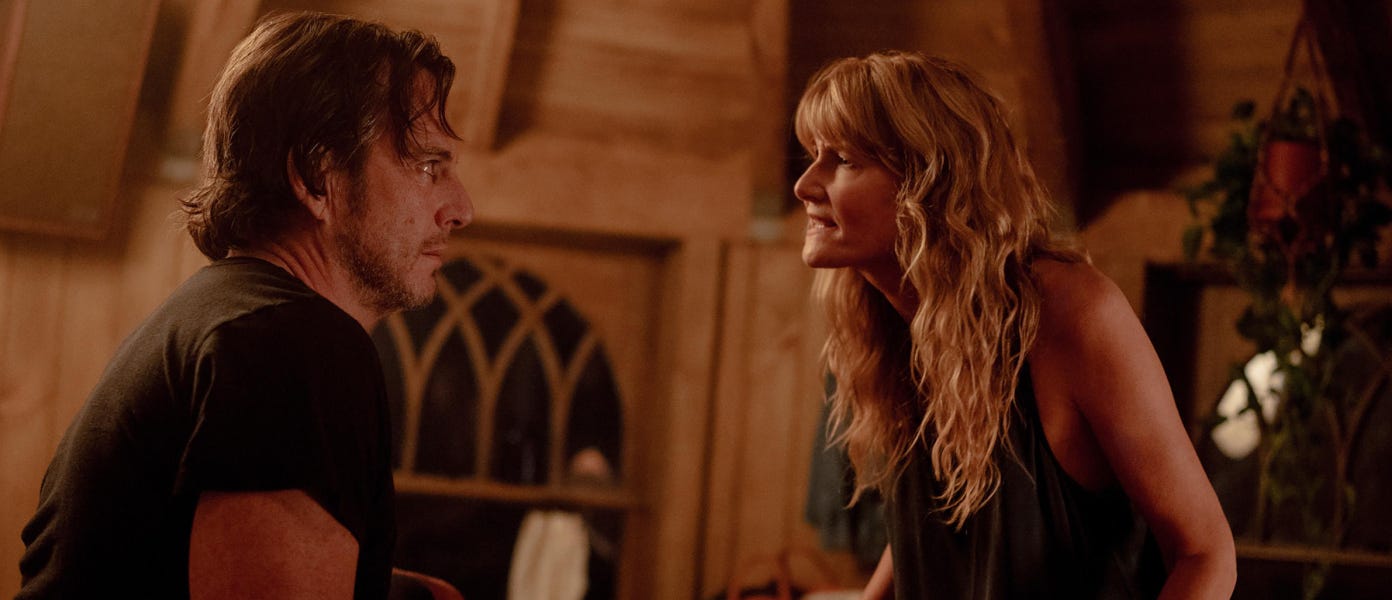
The above still of Bradley Cooper’s new relationship drama Is This Thing On? captures a key moment of confrontation for the separated couple at the center of the film, played by Cooper’s co-screenwriter Will Arnett (Alex) and Laura Dern (Tess). It’s a scene that comes late in the film, and the messy particulars of their ongoing co-parenting and occasional lapses in sleeping together are rendered honestly within a drama that doesn’t happen in an inescapable spiral of torment and psychosis, as seems to be the trend for a certain vein of contemporary drama (I’m thinking Marty Supreme or If I Had Legs I’d Kick You - both films I liked, with a few reservations). Director Cooper seems to be pushing against those structural trends by returning to a gentler arc that feels more akin to the Kramer vs. Kramer era of domestic drama. Cooper also acts in the film as Alex’s brother called “Balls,” a hapless and unserious bit-part actor who is, unfortunately, more fully realized over a few short scenes than most characters in the film. Arnett’s character is somehow the one that feels woefully ill-defined despite the film centering around his journey into the New York comedy scene to talk about himself on a microphone.
Is This Thing On? is a difficult movie to muster much enthusiasm for because it’s take on the New York comedy scene post-Louie and Maron and the seemingly unending throng of comedy podcasters and shows about comedians and podcasters and documentaries about podcasters and comedians and the persistence of Judd Apatow wanting to delve into the “truth” of the comedy life is, well, played out. I’m not only not sure what Is This Thing On? has to add to that conversation, I’m not sure it’s all that interested in stand-up comedy, or if there’s much left to say.
As a marriage drama it’s not bad. Or, more accurately, about half of it feels well drawn and alive—the Laura Dern half. It had never occurred to me how perfect it might be to cast Laura Dern as a former volleyball player-turned-coach, and her struggles with her career and Alex’s perspective on her achievements are ultimately more interesting and believable than the scenes depicting stand-up. I don’t want to be unfair to Arnett, who really made me laugh in the series Arrested Development, but at a certain point in Is This Thing On? it becomes clear (again, in the scene pictured above) that Dern simply outclasses him as a dramatic actor. I mean, she is Laura Dern, after all—but coupled with the fact that there isn’t much for Arnett to play to begin with, the performances never quite feel like they meet face-to-face.
The Housemaid
dir. Paul Feig
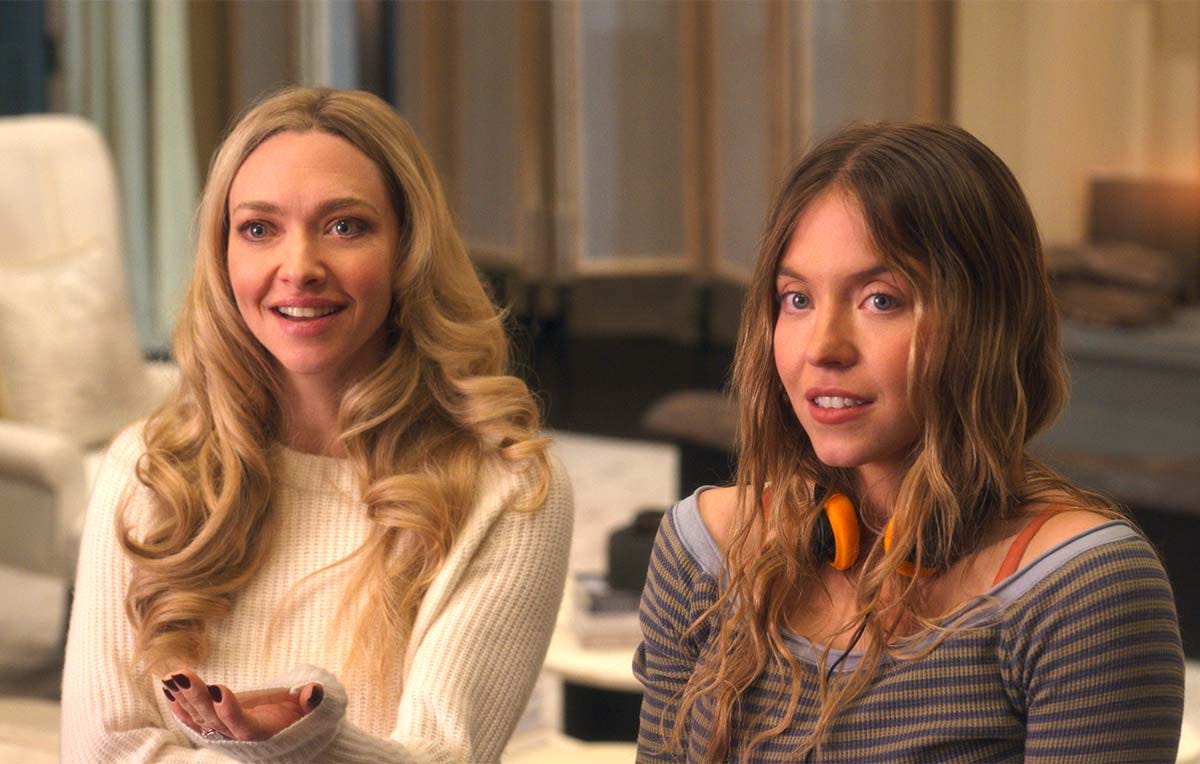
Although I write ESTATIC Screen Notes at night, by day I’m the assistant director of a small library. Aside from this dual-identity existence being a potential set-up for a very boring straight-to-video thriller…it also means a number of Freida McFadden books pass through my hands on the daily. All of these books sport minor variations on the same cover design with titles that get to the point and spine wear that suggests the books take hold of the reader with a precise, yuppie fear thriller accuracy: The Teacher, The Tenant, The Inmate, The Crash, The Housemaid and it’s sequels. I admit I wanted to see The Housemaid simply to get an impression of what these books I’ll likely never get around to reading are like, even though I had a fairly good picture from the Hand That Rocks The Cradle-meets-Single White Female poster design going in.
Turns out The Housemaid is very much in the tradition of the erotic thrillers that Katrina Longworth covered recently on her excellent You Must Remember This podcast over two lengthy series: “Erotic 80’s” and “Erotic 90’s.” As I listened to a lengthy swath of the 90’s series in January of last year I realized how many of these recognizable titles I hadn’t seen, so Jen and I remedied this by binging a number of them while housesitting for friends. According to my Letterboxd diary, between mid-January and mid-February we shot-gunned the following flicks, most of which were first-time views: Sleeping With the Enemy (1991), Impulse (1990), The Crush (1993), The Hand That Rocks the Cradle (1992), Basic Instinct (1992), Sliver (1993), Presumed Innocent (1990), Consenting Adults (1992), The Temp (1993), Color of Night (1994), The Last Seduction (1994), and Indecent Proposal (1993). (Basic Instinct and Presumed Innocent were the only two of these I remember seeing in their time. In fact, I seem to remember watching Presumed Innocent two or three times in the very early 90’s…because I thought it was a good movie, I guess??).
In any case, Jen and I had more than done our homework in preparation for seeing The Housemaid, and while I’m sure there’s a smart and perceptive angle on the feminist revisions of the genre and how male narcissism pervades current politics and manifests in the home, I don’t have much more to say other than it’s a C+ movie that’s probably made better with an audience…B- if you take into consideration Amanda Seyfreid’s commitment to the material. If Sweeney had the chops and egoless abandon that Seyfreid has developed over her increasingly varied and challenging career choices (see last year’s Atom Agoyan film Seven Veils), then I might amend that grade. As it stands, it’s enjoyable trash that makes some highly improbable choices, which ultimately becomes part of the fun. Because so many of the erotic thrillers of the 80’s and 90’s now play as rife with misogyny, pedophilia, homophobia, or transphobia, it will be interesting to see around thirty years from now how The Housemaid reflects the sexuality and class politics of the time, or even plays as an odd genre response to a fascist era.
Hamnet
dir. Chloe Zhao
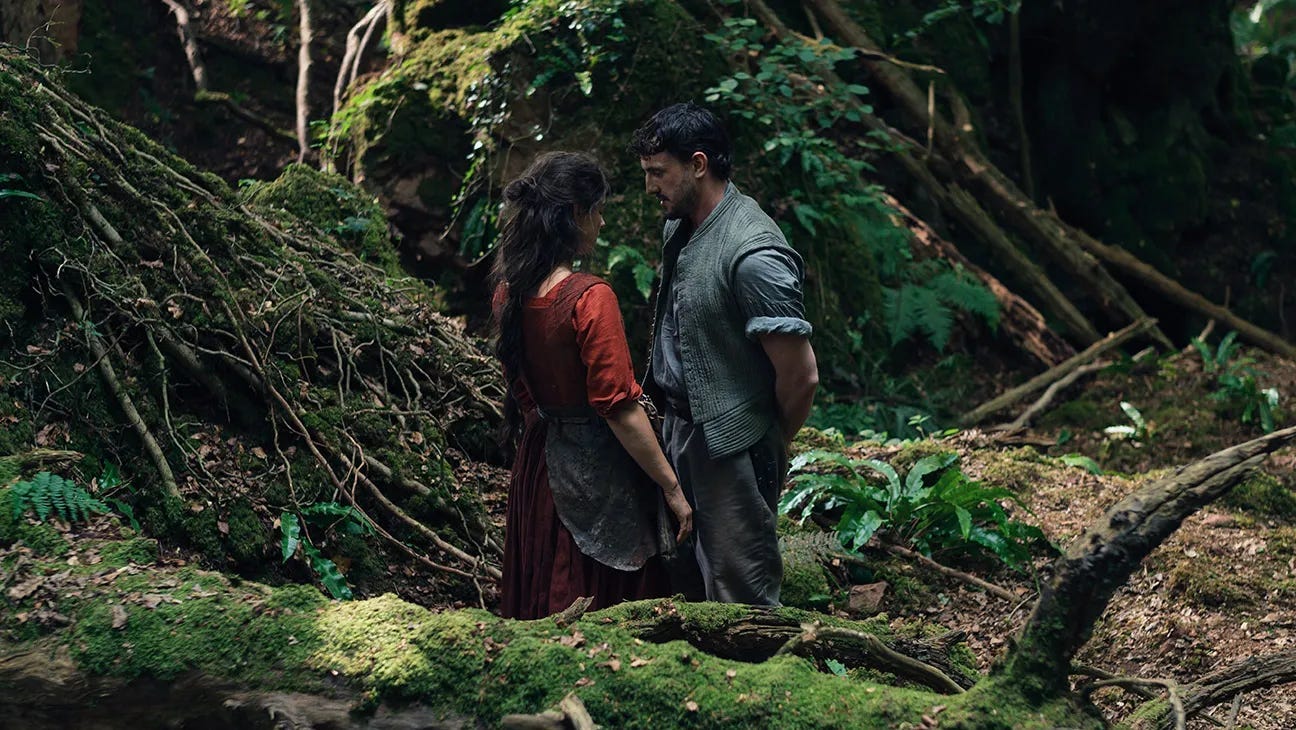
By all reasonable expectations, the combination of Chloe Zhao directing Jesse Buckley and Paul Mescal in a fictionalized drama about Anne Hathaway and William Shakespeare in the period leading up to the creation of Hamlet should hit for me in all the right ways. I’ve written about all three of the primary players here in glowing terms—Zhao for her incredible ability to direct non-actors in films like The Rider and Nomadland, Buckley for shining bright in excellent films like I’m Thinking of Ending Things and The Lost Daughter, and Mescal mostly for how much I loved him in Aftersun—but just because you’ve assembled a great team doesn’t guarantee magic will happen. I realize I may be in the minority here, as Hamnet seems to be the movie “hitting everyone in the feels” and garnering awards buzz at the moment, but it left me fairly unaffected.
In the film’s best passages, Zhao’s direction uses the natural surroundings in a way that gorgeously frames the main character Agnes, the rumored daughter of a forest witch. The opening shot of her nestled in the curved roots of a tree is a stunner, and much of the direction early on has a keen sense of how the natural world plays backdrop to the unfolding (and somewhat plodding) romance. This backdrop will return as a literal backdrop later in the film as we see the Bard reaching up to touch the artificial woodscape of his new play Hamlet, named after his lost son who has succumb to the ravishes of the plague. There are many similar and performative gestures made within the film’s finale depicting that famed theatrical space. At one point, the entire audience reaches out for the actor playing Hamlet in a collective act of grief and connection. On a different day, I might have read this all as some expressionist elevation that uses one of the most dynamic and poured over works of all dramatic literature to build a fantasy involving familial grief and loss. Instead, it felt like an overwrought reduction. I love the idea of growing a fictionalized drama inside of Shakespearean history, and somewhat displacing the man himself as a character, but the story Hamnet choses to tell never makes much of a case for itself apart from a generic sense of grief and an empty expression of “the power of theater.”
At this point, I need to recognize how my bias as a former college theater instructor might work it’s way into my reading of Hamnet though. I routinely taught the play and performed a bit of the speech to the actors for various purposes over the years, so the scenes of Mescal’s hunky Shakespeare performing the ghost of Hamlet’s father in the play-within-the-film seemed so thuddingly modern and in the vein of psychologically realistic cinema acting that it almost felt comical. At one point, Agnes speaks from the audience to Mescal-as-Shakespeare-as-Ghost, imploring: “Look at me…look at me." As far as theater acting circa 1599 is concerned, the time it takes for Mescal to turn and look at her in response might have required a firm chiding from the cheap seats (in a Monty Python-esque accent, preferably): “Get on with it then!” By that point in the film, I was empathizing only with the patrons of the Globe who had five acts to go. All the histrionic play on the themes of grief over losing a child is not served well by the fairly inert pacing and mediocre writing. Unfortunately, the whole thing not only reduces the titular play, but it also reduces a great actress like Buckley to just another rendition of crying for an Oscar. As it’s the Oscar tradition to award sentimentality over sentiment, she’ll likely take it home.
The Oslo Trilogy: Love/Sex/Dreams
dir. Dag Johan Haugerud
I recently taught a session for my good F.O.E. (Friend of Ecstatic) Dr. Jason DelGandio, a professor specializing in communications studies at the intersection of activism and counter-culture history at Temple University. I spoke to his class about the legendary film programmer Amos Vogel, his creation of Cinema 16, and his bible of alternative cinema Film as a Subversive Art. It’s one of my favorite topics to unpack, and each time I teach the lesson I re-approach the question of what might be called “subversive” in relation to what I’ve been watching recently. DelGandio typically frames the discussion by showing his students the 2018 Boots Riley film Sorry To Bother You, which is a great starting point for discussion—a black surrealist satire that will likely retain it’s uniquely strange and relevant qualities for some time. It’s also the type of film that fits perfectly into what one might conjure when they think of political, activist, or disruptive film in both form and content.
Less likely to find it’s way onto a list of notable “subversive” films would be the trilogy of films by Dag Johan Haugerud: Love/Sex/Dreams (a different trilogy, by the way, than the one by Joachim Trier that is also often labelled “The Oslo Trilogy”). But each of these beautifully written feature-length films struck me as deeply subversive in the wake of having watched mainstream American movies over the last twenty years become increasingly commercial, impatient, and downright dumb. I’ve clocked this trend dating back to my old “Ecstatic Film” blog—in fact, you can time travel back around thirteen years to my post about the best films of 2013 “so far” where I gripe a bit about how it was almost impossible to enjoy the quiet, talky Richard Linklater film Before Midnight (also the finale of trilogy, coincidentally) next to the wooshing, percussive, bleeding sound of the movie theater next door playing Iron Man 3. Well, if we time travel back to 2026 that problem is almost gone—those same college town multiplexes have all but stopped playing those Richard Linklater movies, or anything for or about adults; anything quiet, anything still, anything not engaged in deliberate, numbing spectacle.
I didn’t have to worry about the sound bleed when I finally saw Linklater’s excellent Blue Moon this year, because I had to travel to an independent, single screen cinema over an hour away just to see it (shout out, once again, to the awesome Maiden Alley Cinema of Paducah, KY). A slew of great movies this year that definitely would have screened in the popular marketplace fifteen years ago now get no play at all in the multiplexes (in larger cities, sure—which means we still sometimes see trailers for films that play in metropolitan areas, but never reach our local multiplex). Because the shift happened so gradually—though accelerated a bit by the pandemic—I’m sometimes puzzled when I see new films I love and wonder why they’re now not deemed marketable for a wider audience. This is the case for a number of the films up for the best picture Oscar this year, including the other Oslo Trilogy movie Sentimental Value (very good, but not nearly as interesting or subversive as Sex/Love/Dreams), Hamnet (see above), The Secret Agent (possibly my favorite movie of 2025), Train Dreams (a gorgeous movie unceremoniously dumped onto Netflix), and even Del Toro’s Frankenstein! Not even a fairly action-packed adaptation of Frankenstein where currently bankable heartthrob Jacob Elordi is transformed into a Wolverine-esque version of the monster could get play at the movies this year? Puzzling. Or how about The Testament of Ann Lee? Is Mona Fastvold’s gorgeous film so unconventional that it needs to be relegated to the art house? It seems the overall rapturous momentum and inspired choreography of the film might well be embraced by some sect of the modern mainstream. And yet, the industry has not only lost confidence in the audience’s ability to understand any film that doesn’t overexplain itself to the deadly extent that one can stare into their lap and still understand it, they sometimes make it a requirement for those producing their content.
I’m afraid that if the movies present us with nothing but the expected forms and formulas then we lose our collective imagination and capacity to adapt. Vogel would say of the subversive: “It destroys, and thereby builds up new realities and new truths.” It seems we’ve lost most of the popular access and sense of joy that comes with art that destroys in search of new truth, which we could currently stand to exercise our capacity for. And I realize I’ve said almost nothing about Sex/Love/Dreams at this point, but I hope you allow me to indulge my own subversion of the aspect of film writing I despise the most—where a critic re-caps the story beats of a film as if that were actually saying something of substance about it.
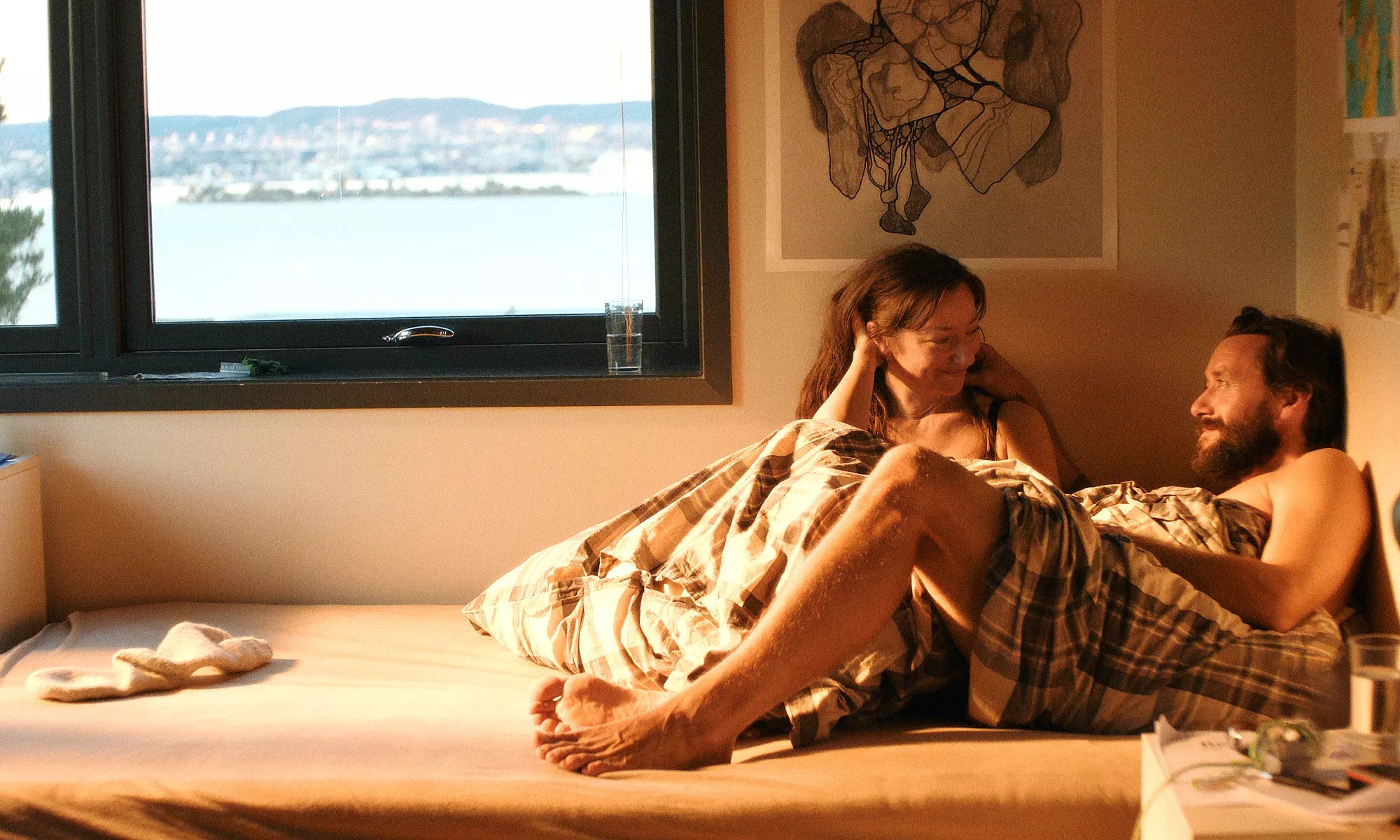
Sex/Love/Dreams—I’ll count them as one film, even though they don’t have to be watched in any particular order, with the connective tissue between films being more thematic and locational than character-based—is a film simply about people living and working in Oslo. The characters are medical professionals, artists, teachers, students, and chimney sweeps—married, single, divorced, in love, unsure, searching, and often in a liminal space of reflection. The film takes such considered time with the evolution of each character’s reaction to the circumstances that it even renders the small act of changing one’s mind a revelation. Since we’ve now collectively been through a period where one of the most professed remedies to mainstream stagnation has been “representation,” it takes a movie like Love/Sex/Dreams to remind us how little we see truly complicated relationships represented when it comes to sexuality, queerness, ambiguous desire, religious belief, infatuation, illness, art, cultural and civic expression, etc. Just because a particular cultural identity is represented in a genre picture where they’re not normally centered doesn’t mean that depiction is automatically dynamic or progressive. In Sex, for instance, the relationship between two chimney sweeps certainly has to do with how they confide in each other about their sexuality and desire, but it’s the way the film situates one of those characters as a modern, Norwegian Christian that resonates so unexpectedly.
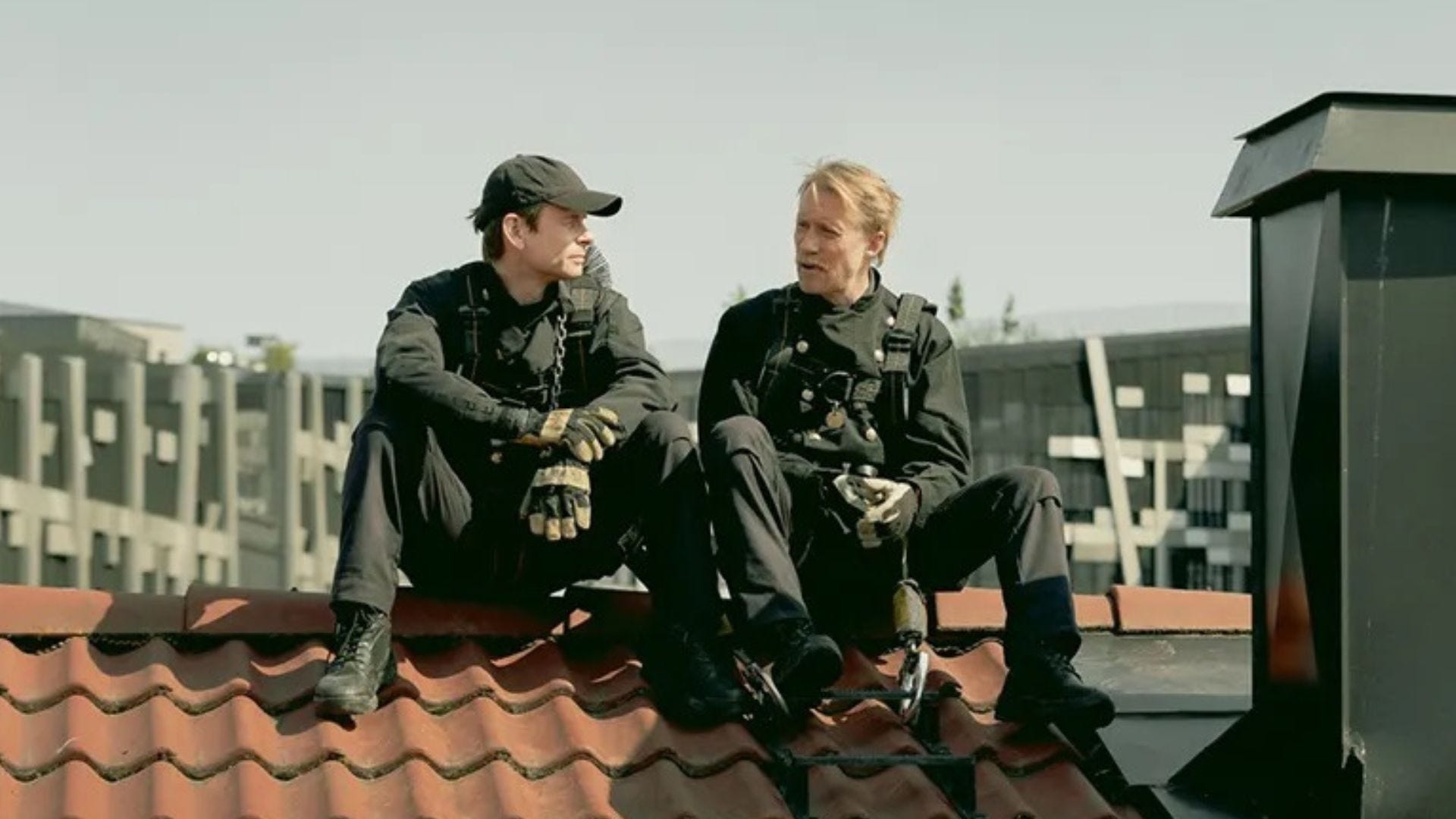
Sex/Love/Dreams, though largely about white Norwegians, is genuinely progressive and, in it’s best moments, dives headlong into relational dynamics that feel downright unseen. And this may be the link to films we more typically consider subversive (as with the style and substance and unique representation of Boots Riley)—it presents something that feels unseen. The films cover a lot of ground and do so in a dramatic language that rarely feels like it relies on any template for dramatic structure—or lands the necessary dramatic beats just enough to remind you how far it can veer from them and still stick the landing. Such is the case with the final scene of Dreams, for instance, which somehow finds a very satisfying rom-com coda through an otherwise complicated and ambiguously narrated tale of a student’s infatuation with their teacher.
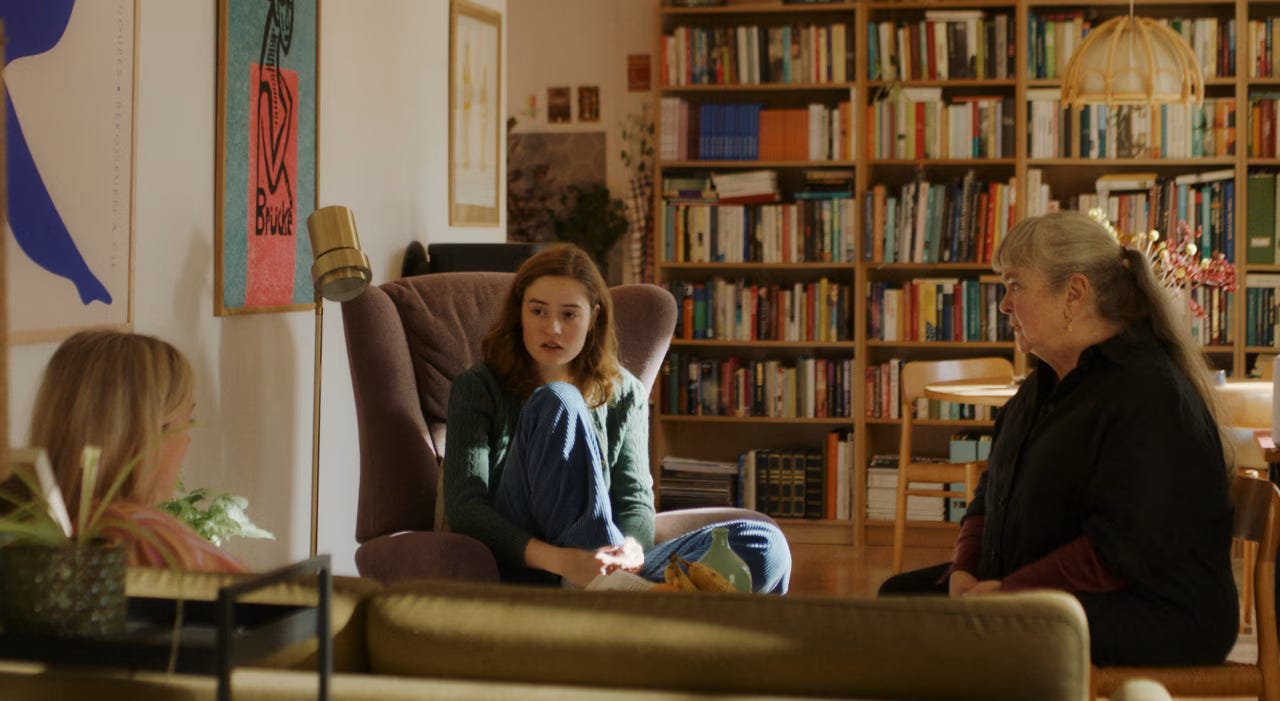
The cinematography never calls attention to itself, nor does the editing, writing, or design elements. It’s a patient, deeply human and questioning trilogy, and it’s a shame that something like Sex/Love/Dreams feels as wrenchingly subversive as it does in relation to so much being made and deemed wide release-worthy in the States. Subversion is often thought of as transgressive, avant-garde, or indulging shock tactics. But when the state of cinema has already been degraded to such an extent, subversion arrives in the form of intelligent conversations between honestly considered characters.
Now playing at no theater near you or me (but available for streaming here and elsewhere).
Special thanks to the always incredible John Waters year-end list that made me aware of Haugerud’s trilogy - they were his number three for 2025, and so far they’re my number one in 2026.
No Other Choice
dir. Park Chan-wook
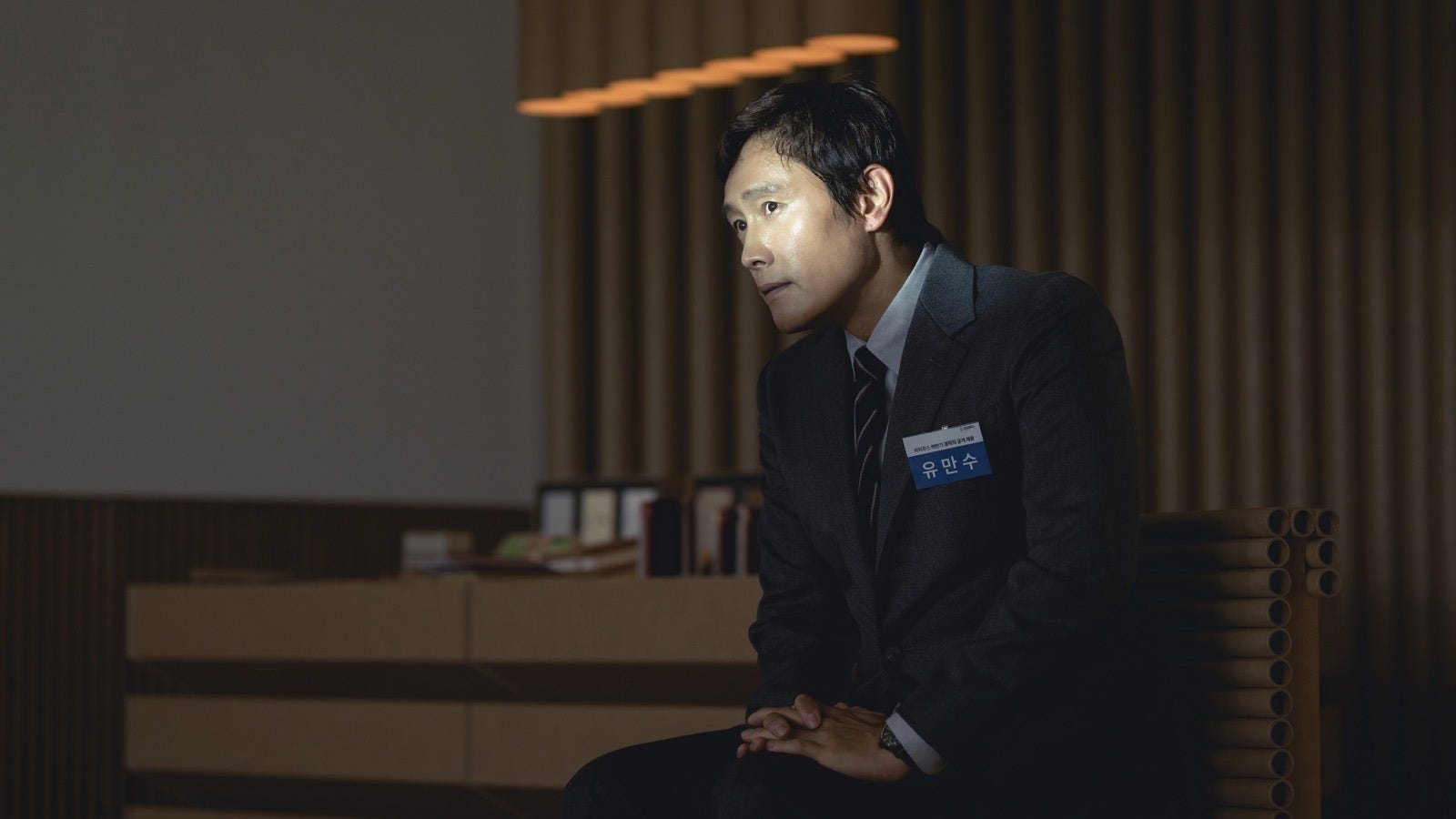
Park Chan-wook does a curious thing with his new thriller No Other Choice, a story that blends a satire of class struggle and morality with a dark comic premise. The premise is that Man-soo, a paper factory manager who “has it all,” is fired in his employer’s move to mechanize production. After hitting rock bottom he finds that rare job opening that would restore his class status, pay for his wife’s dancing lessons, and bring back the family dog they can no longer afford to feed. Then he creates a hit list of all the better possible candidates for the position that stand in his way. And the curious thing Park does with this premise is to frustrate it as much as possible, almost to an extent that threatens to halt the entire momentum of the film. I’m not sure how smoothly this “hit list” premise plays out in Donald Westlake’s source material for the film, the 1997 novel The Ax (also adapted into a 2005 film by Costa-Gavras, to whom No Other Choice is dedicated), but director Park revels in the opportunity to frustrate the expectations and find comedy in what might first seem like a predictable structure.
In No Other Choice, as with Park Chan-Wook’s excellent previous film Decision to Leave (you can read my ESN review from 2022 here, which contains a bit more context on his career and filmography), the technique of this master director goes beyond simply upsetting the predictable, creating a combination of seasoned directorial technique and ambition into a grand design that thrills scene-to-scene, beat-by-beat. In fact, No Other Choice seems to be juggling more elements than is typical for the director, and in collaboration with cinematographer Kim Woo-hyung (who also worked with Park on the 2018 mini-series The Little Drummer Girl) seems to approach each scene and set piece with a sort of liberated enthusiasm. One wonders whether the whole thing is going to collapse under the weight of it’s ideas, symbols, and continually unfolding architecture—something like what happened with Park’s collaborator and friend Bong Joon-ho’s last film Mickey 17—but No Other Choice, despite some on-the-nose dialogue here and there, keeps finding visual ideas that hold everything together through the final frames. The rainy skies Park loves so much ultimately clear for our protagonist Man-soo, but the climate of his soul is another question.
Like Bong’s Parasite, No Other Choice is concerned with the crushing class divide in Korean culture, but where Parasite is focused on the chasm of wealth and privilege dividing the two (and ultimately three) families central to the story, No Other Choice is focused on how thin the line is between the haves and have-nots, marked by the meta-absurdity of whether or not Man-soo’s family can retain their Netflix subscription. But the added satirical element in No Other Choice has to do with the actual villain of the film. Man-soo is about as hopeless as they come as a killer, and spends much of the film comically failing every mark on his list. His ability to wipe out the competition is nothing compared to the AI automation that ultimately triumphs, consuming any bit of moral fiber left in Man-soo with it, just as it’s voraciously doing to a large swath of culture currently.
or